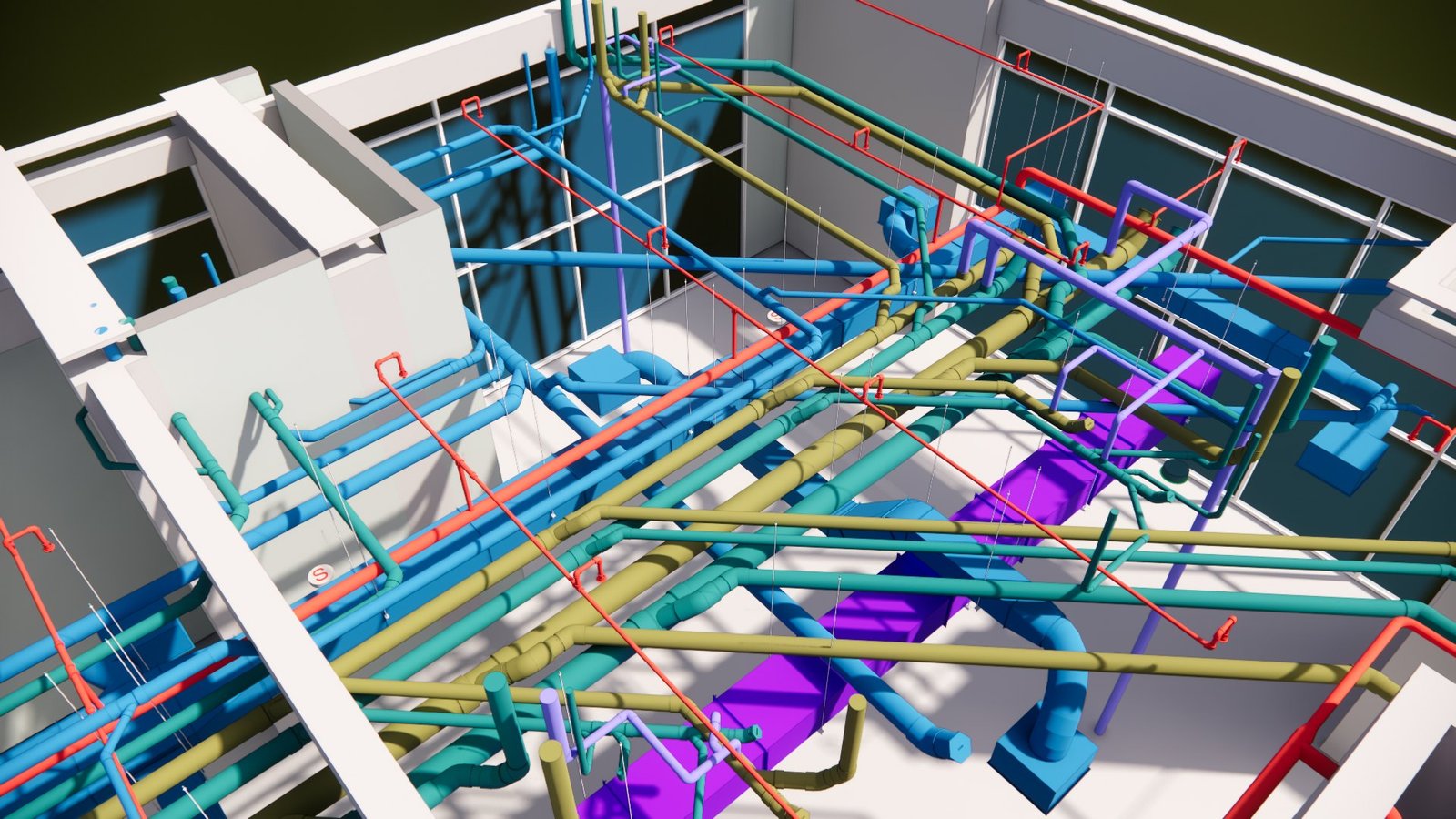
Practical, non-salesy write-ups on LOD standards, coordination workflow and fabrication - published as they're ready.
Published pieces are live now. The rest are queued up - check back, or get in touch if you want to be notified when they go live.
What separates a construction-ready shop drawing package from a design model, and how the BIM workflow gets you there.
Read the article → MECHANICALA practical breakdown of what changes at each LOD tier, and which one fits your project stage.
Read the article → COORDINATIONWhat the clash-free guarantee means in practice, and why it's scoped to construction-ready, not design-stage, engagements.
Read the article → FABRICATIONHow pipe and duct spool breakdown works once a model reaches LOD 400.
Read the article → OUTSOURCINGThe tradeoffs for a 20-300 person MEP contractor deciding how to resource a busy quarter.
Read the article → OUTSOURCINGWhat MEP BIM outsourcing actually covers, why Vietnam works, and what separates a real partner from a drafting shop.
Read the article → VIETNAMThe practical reasons contractors outsource MEP BIM to Vietnam - talent, scalable capacity and coordination value.
Read the article → ASIAWhy the delivery team matters more than the country, and where Vietnam stands out across Asia.
Read the article → SELECTIONA practical checklist covering MEP capability, LOD approach, QA/QC, communication and running a pilot first.
Read the article → COST & SCALEHow to actually compare in-house BIM teams against outsourced support, and where a hybrid model works best.
Read the article → QUALITYWhat we actually check before a coordinated model gets issued to a contractor or project team.
Read the article → REPORTINGWhat a weekly coordination report needs to cover so a PM can read it in two minutes and actually understand progress.
Read the article → COORDINATIONHow to interpret a clash report by looking past the raw count to severity, clusters and ownership.
Read the article → PLANNINGA BEP checklist covering roles, model standards, coordination workflow, QA and information exchange.
Read the article → OUTSOURCINGA checklist for evaluating a BIM outsourcing partner before kickoff — people, process, QA/QC and communication.
Read the article → COST & SCALEHow fixed-fee and time-and-materials pricing shift risk between contractor and provider on a coordination engagement.
Read the article → TOOLCHAINWhere Revit, Navisworks and Revizto each fit in an MEP coordination workflow — and why the workflow matters more than any one tool.
Read the article → MODELLINGWhy federating discipline models — rather than working in one file — improves ownership, performance and information exchange.
Read the article → MISSION CRITICALWhy data centre MEP coordination needs a constructability-first mindset — density, redundancy, equipment interfaces and the cost of rework.
Read the article → HEALTHCAREWhat makes hospital MEP coordination different — clinical space priorities, service density, access, and phased construction.
Read the article → STANDARDSHow MEP documentation conventions actually differ across the US, UK and Australia — and why the project's own documents matter more than the country.
Read the article → DOCUMENTATIONWhat as-built drawings actually capture, how they're produced, and the common mistakes that make them unreliable at handover.
Read the article → REALITY CAPTUREFrom point cloud to coordinated model — the Scan-to-BIM workflow, what to model, and the accuracy questions worth asking upfront.
Read the article → COORDINATIONWhy proactive coordination can prevent more problems than any clash test finds after the fact — and why detection still matters regardless.
Read the article →